The common cold, often accompanied by coughing, is – as its name indicates – the most commonly occurring human illness. According to a 2003 University of Michigan survey measuring doctor’s bills, over-the-counter (OTC) medications, and prescription drugs, the common cold’s impact on healthcare costs in the US is estimated to be greater than for such prevalent conditions as high blood pressure, pulmonary disease, congestive heart failure, asthma, and migraines.
“From a bottle of cough syrup to missed time at work and school, the price of catching a cold really adds up,” Dr. A. Mark Fendrick, who led the study, stated. “We wanted to calculate the total economic impact that the cold has on our economy.” (Today’s Healthcare Costs, Nov. 2007) The price tag? Nearly $40 billion a year, including $2.9 billion for OTC drugs, $4.8 billion to treat cold complications, and $7.7 billion in doctor’s visits.
Though there are nearly 500 million colds yearly, what surprised Dr. Fendrick was “how often the public uses the healthcare system to treat a cold.” At the cost of $1.1 billion, as documented by the study, 41 million antibiotic prescriptions were given for colds, even though they have no effect on this viral illness. This transaction further raises the expense created by this illness.
Here is a Cayce-formulated remedy to assist this common ailment.
An Herbal Respiratory Tonic
On March 10, 1938, a 58-year-old woman requested a check physical reading for a “cold that kept hanging on, also cough.” (Cayce Reports) In her reading (Cayce) she was told that her resistance was low, but if certain precautions and activities were taken, improvement would result.
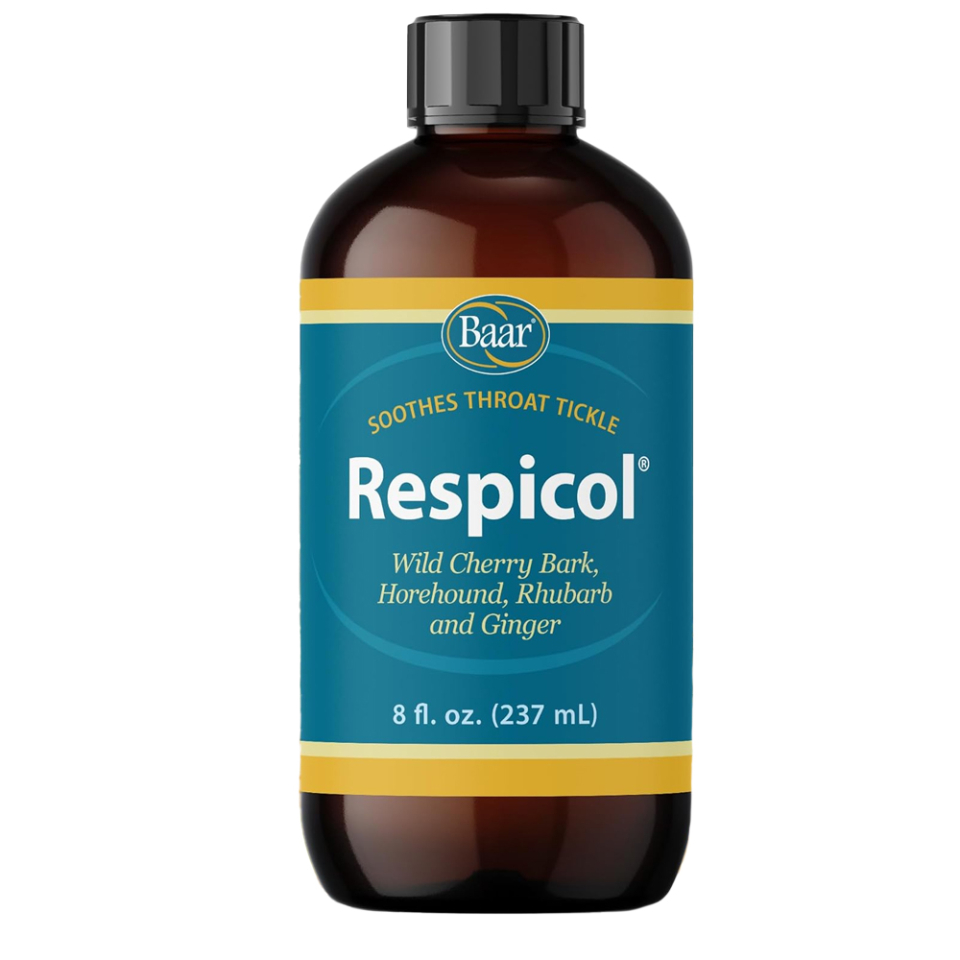
Dietary advice was given first: few starches; a small steak two or three times a week as well as beef juice “will make for strength.” [click here for more info on beef juice] Then came this formula and directions for a cough syrup, known today as Respicol®. As a cough medicine, an expectorant, and for a healing through the whole system, prepare:
Combine Strained Pure Honey in water… Skim off… then add Grain Alcohol. To this as the carrier, then, add – in the order named: Syrup of Wild Cherry Bark, Syrup of Horehound, Syrup of Rhubarb, Elixir of Wild Ginger. Shake well the solution before the dose is taken, which would be about a teaspoonful – and this may be taken as close together as every hour. It will allay the cough, heal those disturbing forces through the bronchi and larynx, and make for better conditions through the eliminations.
She was also advised to take weekly enemas and receive spinal manipulations “at least once or twice a week…”
Records do not indicate if she took the tonic. Two months later, though, in her next reading, Cayce reminded her to “use the cough syrup as given…” (Cayce)
Individual Ingredients
Throughout the readings several formulas are given for cough syrup, a number of which contain the above ingredients. Additional comments on them point to each one’s particular purpose for inclusion in the formula.
“The first ingredient, The Wild Cherry Bark, is a direct activitive force upon the pneumpgastrics and the pulmonary system” (Cayce) It “is an expectorant and a purifier” (Cayce) and “is for cleansing the blood supply.” (Cayce) “[Wild Cherry Bark acts] with the gastric juices of the stomach, [and is] a carrier for the rest of the system, acting with the respiratory system…” (Cayce) Several readings mention removing this bark from the north side of the tree.
The combination of cherry and Horehound “will not only aid digestion but stimulate the circulation for the upper portion of the head and through the bronchial area, thus giving a better flow of circulation for the throat and the gums…” (Cayce) “…horehound is as the active force in same to the tissue of the body, especially as regarding the functioning of the kidneys and of the functioning of the mucus producing tissue from diaphragm up, without suppressing the functioning of either the liver or the spleen.” (Cayce) As an “expectorant in the cough syrups” (Cayce), along with other ingredients, horehound also helps with the consequent irritation from coughing.
“The Rhubarb will tone the activity of the lacteal ducts…” (Cayce) It is “a vegetable form of eliminant” (Cayce), a mild laxative that helps to “clarify poisons from the body” (Cayce), and acts with “the gastric juices of the stomach, so that the assimilation of the iron may take place.” (Cayce)
“…Wild Ginger [as well as other herbs] will purify the conditions through the intestinal system, as well as take away those reactions or regurgitations “…Wild Ginger [as well as other herbs] will purify the conditions through the intestinal system, as well as take away those reactions or regurgitations that cause the tendency for a cough.” (Cayce) It also “will work directly with the gastric flow in the liver’s activity…” (Cayce)
“The Honey as a carrier is a normal reaction to the gastric juices of the stomach, the intestines throughout.” (Cayce) Combined with water it makes “for that which may assimilate with the system.” (Cayce)
Last, grain alcohol, mentioned for many formulas in the readings, is a natural preservative and a carrier for the other ingredients.
According to An Edgar Cayce Home Medicine Guide, “A great advantage of this formula is that it does not produce side effects and may be taken as often as once every hour until relief is obtained.”
When in need of a soothing, natural treatment for your sore throat and cough, this Cayce formula may provide just the necessary respiratory relief.
Call to place an order: 1-800-269-2502 USA
Call Customer Support: 610-873-4591
[Mon -Fri: 9 a.m. – 4:30 p.m. EST]



Elaine Hruska is a therapist at the A.R.E. Houston Spa and former teacher at the Cayce/Reilly* School of Massotherapy. This article is reprinted with permission by Venture Inward Newsletter, Virginia Beach, VA.
www.baar.com Baar Products is the Official Edgar Cayce Company
I have had a chronic cough for years, and have undergone extensive testing for allergies, acid reflux, and many other things, and have had many different and experimental treatments from regular medical professionals to no avail. I need help. Please give me information about the natural remedies that Edgar Cayce recommended in his readings. I know there is a cure for this cough… I just have not found it yet. Thank you!
Hi, did it help You? The respicol?