“Myrrh is mine, its bitter perfume/ breathes a life of gathering gloom/… sealed in the stone-cold tomb,” sings one of the Magi in the Christmas carol “We Three Kings of Orient Are.”
Mentioned in nearly 400 Edgar Cayce readings, myrrh is a reddish-brown resin or gum that originates from a bush native to East Africa and Arabia, where over 135 species are found. Growing mainly in arid regions, it is mentioned in both the Old and New Testaments. The Christmas carol alludes to its use as a perfume (in which the gum was pressed into cakes) and as a salve for purifying the dead, but it is also a spice and an incense. As an effective antimicrobial agent, it is used to treat gum, mouth, and catarrhal problems, such as mouth sores, toothache, ulcerated throat, and sinusitis, and as a liniment for bruises, abrasions, aches, and sprains. How did the readings treat this royal gift?
As a Massage Lubricant
The Cayce readings most often recommend myrrh for external applications, particularly as an ingredient in a massage formula (as a tincture, equal parts with olive oil). “Cayce did not always explain his selection of a particular oil or mixture,” states Dr. Harold J. Reilly, “but where we do find explanations there always seemed to be a therapeutic rationale, rather than caprice or custom.” [Handbook for Health Through Drugless Therapy (rev. ed.), p. 162]
Explanations from the readings for using the myrrh itself include: “…the Tincture of Myrrh acts with the pores of the skin in such a manner as to strike in, causing the circulation to be carried to affected parts…”; “…the Myrrh will be healing and allow the muscular forces to relax [more]”; it “will rest the body and make for greater stimulation” and for “strengthening in the muscular forces…” (Cayce)
The combination of equal parts tincture of myrrh (an alcoholic solution of the herb) and olive oil (in a few instances sassafras oil or compound tincture of benzoin was also added) is mixed first by heating the oil, then adding the myrrh; otherwise, the two components would remain separate. Just the amount needed would be mixed, so it’s made fresh with each use. One reading states: “Heat the oil, not to boiling—but nearly so, and add the myrrh. About a tablespoonful of each should be used. This the quantity to be used at each application.” (Cayce) Often the mixture is to be applied locally.
An additional note: in one reading, the opposite instruction is given; that is, to heat the myrrh, then add the oil. the explanation given is that “this will make for more of an ointment (while the other would remain in a different solution entirely).”
These two substances together make an effective combination when rubbed into the skin. One man was told that for his back massage “it’s strengthening for the body.” (Cayce) Rubbed into her lower back and down her legs would also “strengthen the body” for one woman, as well as provide“food value for the capillary circulation and for the equalizing of the circulation throughout the body.” (Cayce) Another reading notes that “the healing forces of the [olive] oil as combined with the myrrh [are] a stimulation to the circulatory forces in the superficial portions of the body.” (Cayce) When massaged along the cerebrospinal system, “the oil and Myrrh acting as a lubricant and taken in the capillary circulation, assist in the proper eliminations, and the Myrrh acting as the carrier, while oil acts as food and as stimulant, same as that in the Myrrh.” (Cayce)
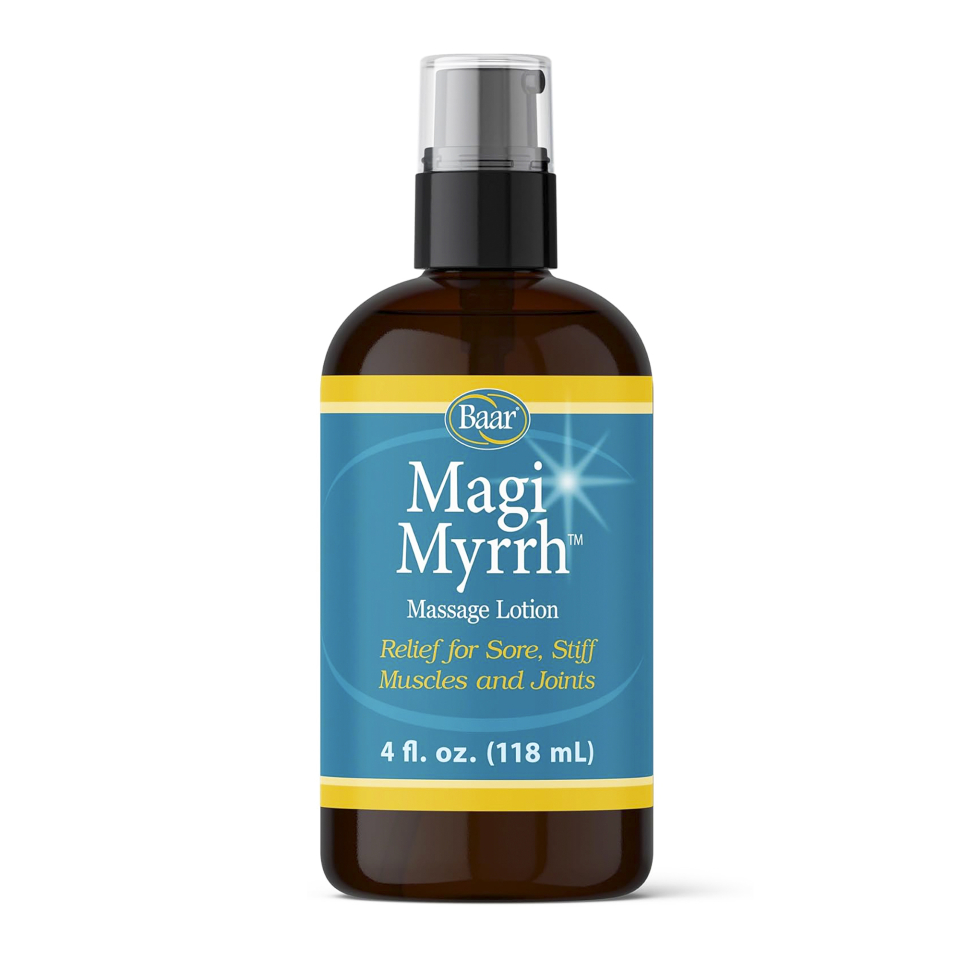
Following an osteopathic manipulation and relieving calluses, cramping of hands and feet, and muscle soreness are further indications for this olive oil/myrrh combination (Magi Myrrh™). Its strengthening effect and increase in circulation also provide good reasons for its beneficial use as a massage lubricant.
Other Purposes in the Readings
Used in combination with additional herbs and oils (see individual readings on specific physical conditions), myrrh is listed as an ingredient in several tonics and inhalants; for douches and sitz baths, often related to gynecological problems; in pellets for debilitation; and to remove the residue from the eyelids following the application of a potato poultice. In a few cases it was recommended, along with other substances, as an additive in steam baths to relieve tension and itching as well as increase eliminations.
Significance of the Three Gifts
Myrrh’s association with one of the three gifts of the Magi or Wise Men to the infant Jesus is familiar to most people, and its significance has long been open to speculation. In one reading Cayce referred to the Wise Men as “seekers for the truth [and] as ye would term today psychic.” (Cayce) following their intuition they were led to the infant, “giving the thanks for this Gift, this expression of a soul seeking to show wayward man back to God.”
Cayce further elaborated on the symbolism of each of the three gifts of gold, frankincense and myrrh: “…they represent in the metaphysical sense the three phases of man’s experience in materiality; gold, the material; frankincense, the ether or ethereal; myrrh, the healing force as brought with same; or body, mind, soul.” (Cayce) Perhaps this healing force can be kept in mind when one is applying or using this herb for relief and strength.
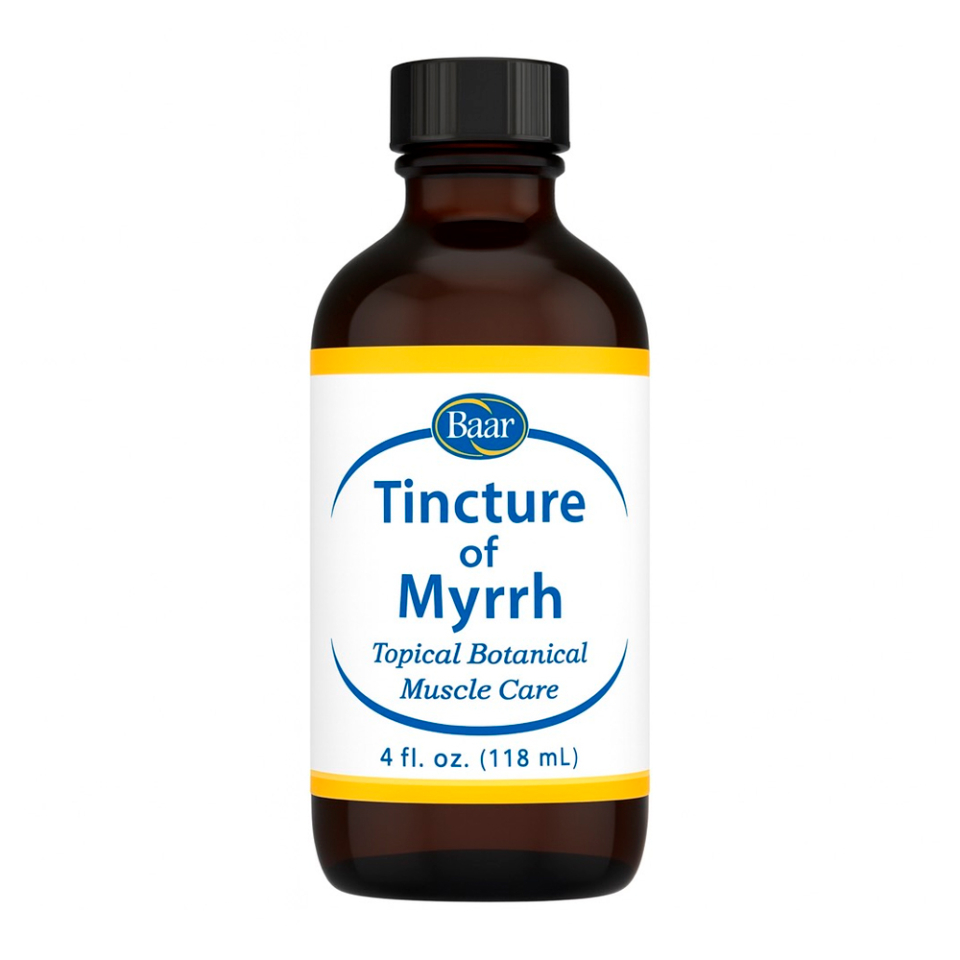
Currently myrrh is available as a tincture of 4 fluid ounces from the official worldwide supplier of Cayce health care products (see contact information in box). Mixed in equal parts with olive oil, it becomes a liniment or salve for muscular pain or strain, offering healing and soothing relief from tension and soreness.
© True Health Newsletter
Magi Myrrh™ Edgar Cayce formula
The magic of this ancient herb, when applied topically, works by alleviating pain and swelling, revitalizing circulation and relaxing stiff, aching muscles and joints.
Cayce’s Myrrh, Olive Oil and Lanolin combination comes in a convenient, easy-to-use pump bottle.
Magi Myrrh™ Massage Lotion is blended with nutrient-rich, organic Olive-Oil and moisturizing Lanolin and penetrates deeply to restore ease of movement. This unique blend of ingredients helps to strengthen and relax muscles, as well as relieve cramping.
“These will make for improvement in superficial circulation.” (Cayce)
“(Q) What troubles lower part of back?”
“(A) Pressures from poisons through the pelvic, lumbar and sacral area. Massages should be with… Olive Oil… Tincture of Myrrh, and Lanolin.” (Magi Myrrh™) (Cayce)
“… Begin with the toes, and go through the… frontal portion of feet, also the instep, the heel, and through the calf of the leg, the knee and along the sciatic nerves, and then the whole length of the spine; particularly through the areas of the outer edges of the hip bone. Then massage across the lumbar-sacral and each side of the spine rather than so much on the spine itself, but use the circular motion in applying the oils, especially on the torso.” (Cayce)
“…massage the hips, the lower portion of spine, the limbs, with the combination of oils, Olive Oil, Tincture of Myrrh, and Lanolin.” (Magi Myrrh™) (Cayce)
Purchase Tincture of Myrrh & Magi Myrrh Online
Call to place an order: 1-800-269-2502 USA
Call Customer Support: 610-873-4591
[Mon -Fri: 9 a.m. – 4:30 p.m. EST]

Elaine Hruska is a therapist at the A.R.E. Houston Spa and former teacher at the Cayce/Reilly* School of Massotherapy. This article is reprinted with permission by Venture Inward Newsletter, Virginia Beach, VA.
www.baar.com Baar Products is the Official Edgar Cayce Company
Leave a Reply